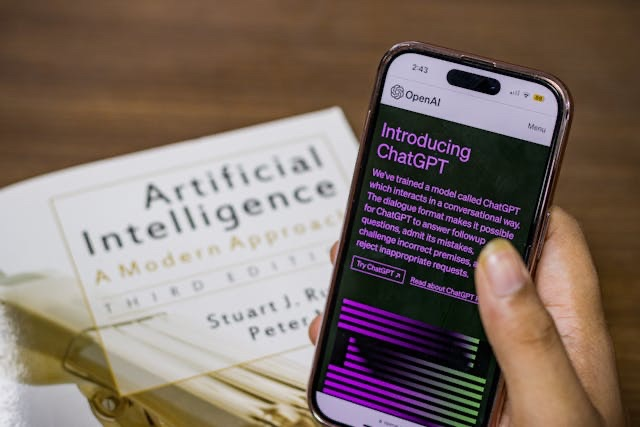
In less than a decade, OpenAI has transformed from an ambitious research lab into one of the most influential forces shaping our technological future. What began as a mission to ensure artificial intelligence benefits all of humanity has evolved into a company that’s redefining what’s possible with AI. Behind this remarkable journey stands a group of visionaries who recognized both the promise and potential perils of advanced artificial intelligence.
The Dream Team: OpenAI’s Founding Visionaries
When OpenAI launched in December 2015, it assembled what could only be described as an AI dream team. The founding members included:
- Sam Altman – Former president of Y Combinator, Altman has been the face of OpenAI as its CEO, guiding the company through tremendous growth and occasional controversy.
- Elon Musk – The Tesla and SpaceX CEO provided early funding and direction before departing the board in 2018 due to potential conflicts of interest with Tesla’s AI development.
- Ilya Sutskever – A machine learning pioneer who previously worked at Google, Sutskever became OpenAI’s Chief Scientist and has been instrumental in the company’s research breakthroughs.
- Greg Brockman – Coming from Stripe, Brockman took on the role of CTO, building OpenAI’s technical infrastructure and research capabilities.
Other founding members included Trevor Blackwell, Vicki Cheung, Andrej Karpathy, Durk Kingma, John Schulman, Pamela Vagata, and Wojciech Zaremba—each bringing specialized expertise in various aspects of artificial intelligence and machine learning.
What united this diverse group of technologists and researchers was a shared concern: artificial general intelligence (AGI)—AI systems that could potentially surpass human intelligence across nearly all tasks—was coming, perhaps sooner than many expected. And they believed that whoever controlled that technology would wield enormous power over the future of humanity.

A Noble Mission: Why OpenAI Was Created
OpenAI’s origin story reflects both optimism and caution about AI’s future. The company was established with a striking $1 billion pledge from its founders and other donors, including Reid Hoffman, Peter Thiel, and Jessica Livingston. But what drove this investment wasn’t just profit potential—it was a philosophical commitment.
In OpenAI’s own words from their founding announcement: “Our goal is to advance digital intelligence in the way that is most likely to benefit humanity as a whole, unconstrained by a need to generate financial return.”
This mission was shaped by several key concerns:
- Concentration of Power – The founders worried that AGI might become concentrated in the hands of a few large corporations or governments.
- Safety Concerns – They recognized that powerful AI systems could pose existential risks if developed without proper safety measures.
- Democratization of Benefits – They wanted to ensure AI’s benefits would be distributed broadly rather than accruing to only those who controlled the technology.
Initially structured as a non-profit, OpenAI’s founding reflected an idealistic vision of open collaboration in AI research. The name itself—OpenAI—signaled a commitment to transparency and shared progress.
From Non-Profit to Industry Leader: OpenAI’s Evolution
Perhaps the most interesting aspect of OpenAI’s journey has been its evolution from a pure non-profit to what it calls a “capped-profit” company. In 2019, OpenAI created a for-profit entity, OpenAI LP, while maintaining the original non-profit as its governing body.
This structural change reflected a pragmatic recognition: developing cutting edge AI requires enormous resources. The compute costs alone for training models like GPT-4 run into the hundreds of millions of dollars. This reality led to a partnership with Microsoft, which invested $1 billion in 2019 and reportedly another $10 billion in 2023.
Along the way, OpenAI has released a series of increasingly powerful AI systems:
- GPT series – Starting with GPT-1 in 2018 and culminating (so far) with GPT-4, these large language models have revolutionized natural language processing.
- DALL-E – These models can generate images from text descriptions, opening new frontiers in visual creativity.
- ChatGPT – Released in late 2022, this conversational AI system quickly became the fastest-growing consumer application in history, reaching 100 million users in just two months.

The company has experienced its share of internal turbulence, including a dramatic episode in November 2023 when Sam Altman was briefly removed as CEO by the board before being reinstated following pressure from employees and investors. This incident highlighted the tensions inherent in balancing commercial success with OpenAI’s original safety-focused mission.
What OpenAI Means for Our Future
As we look toward the future, OpenAI stands at the center of perhaps the most consequential technological transition of our lifetimes. The implications of their work extend across virtually every domain of human activity.
The Changing Nature of Work
One of the most immediate impacts concerns employment. AI systems like those developed by OpenAI are already transforming the job landscape:
- Automation of Routine Tasks – Many jobs involving predictable, rule-based tasks are becoming increasingly automated.
- Augmentation of Knowledge Work – Professionals from writers to programmers to lawyers are finding their capabilities enhanced by AI tools.
- Creation of New Roles – New job categories are emerging around AI, from prompt engineering to AI ethics specialists.
For those in the 40-60 age bracket, this transition presents both challenges and opportunities. While some traditional roles may diminish, those who adapt and integrate AI into their workflow can achieve productivity gains that were previously unimaginable.
The Democratization of AI
Perhaps the most exciting aspect of OpenAI’s impact is the democratization of AI capabilities. Tools like ChatGPT and DALL-E have made sophisticated AI accessible to virtually anyone with an internet connection.
This accessibility has sparked a wave of innovation from unexpected quarters. People with no formal training in computer science or AI are building businesses and creative projects atop these platforms. From AI-powered writing assistants to personalized education tools to entirely new forms of artistic expression, we’re seeing a proliferation of applications that would have seemed like science fiction just a few years ago.

The Economic Gold Rush
We’re witnessing something akin to a gold rush in the AI space. Entrepreneurs are launching AI-powered startups at a breakneck pace, and venture capital is flowing accordingly. Some individuals with the foresight to develop expertise in this area early have indeed built multi-million dollar businesses with relatively little formal AI training.
For instance, some have created specialized AI tools for particular industries, built prompt libraries that help others use AI more effectively, or developed educational content teaching others how to leverage these technologies. The barriers to entry remain relatively low compared to previous technological revolutions, creating opportunities for those willing to invest time in understanding and applying AI tools.
Ethical and Societal Considerations
OpenAI’s work also raises profound ethical questions that society is just beginning to grapple with:
- Job Displacement – How do we manage the transition for workers whose skills become less valuable in an AI-powered economy?
- Misinformation – How do we prevent AI systems from being used to generate convincing but false content at scale?
- Privacy – What happens to our personal data when it’s used to train increasingly sophisticated AI systems?
- Existential Risk – How do we ensure that increasingly powerful AI systems remain aligned with human values and under human control?
OpenAI itself has acknowledged these concerns and has made efforts to address them, though critics argue these efforts sometimes take a back seat to commercial imperatives.
Embracing the AI Future
For those wondering how to navigate this rapidly changing landscape, particularly those in mid-career, several approaches make sense:
- Develop AI Literacy – Understanding the capabilities and limitations of AI tools is becoming as fundamental as computer literacy was a generation ago.
- Focus on Human Strengths – Emotional intelligence, creativity, ethical judgment, and interpersonal skills remain distinctly human advantages.
- Become an AI Collaborator – Learn to work effectively with AI tools to enhance your productivity and capabilities.
- Explore New Niches – Look for opportunities created at the intersection of AI and your existing expertise.
The world of work is indeed changing, but change brings opportunity alongside disruption. Those who approach this transition with curiosity rather than fear will find themselves best positioned to thrive.
The Future Is Now
OpenAI’s founders came together because they believed artificial general intelligence would fundamentally reshape society. While true AGI remains on the horizon, the impact of their work is already being felt across every sector of the economy.
As Sam Altman has said, “The technological progress we make in the coming decades will create the world we leave for future generations.” OpenAI’s story is still being written, but it’s already clear that few companies will have as profound an influence on that future world.
The vision that brought together that remarkable group of founders in 2015 has evolved in ways they might not have predicted, but their central insight remains valid: AI represents both enormous promise and potential peril for humanity. How we collectively navigate this transition may well determine the course of civilization for decades to come.
For those ready to embrace this future, the opportunities are boundless. The world is indeed our oyster, we just need the courage and curiosity to explore it.
Discover more from Next Chapter Magazine
Subscribe to get the latest posts sent to your email.