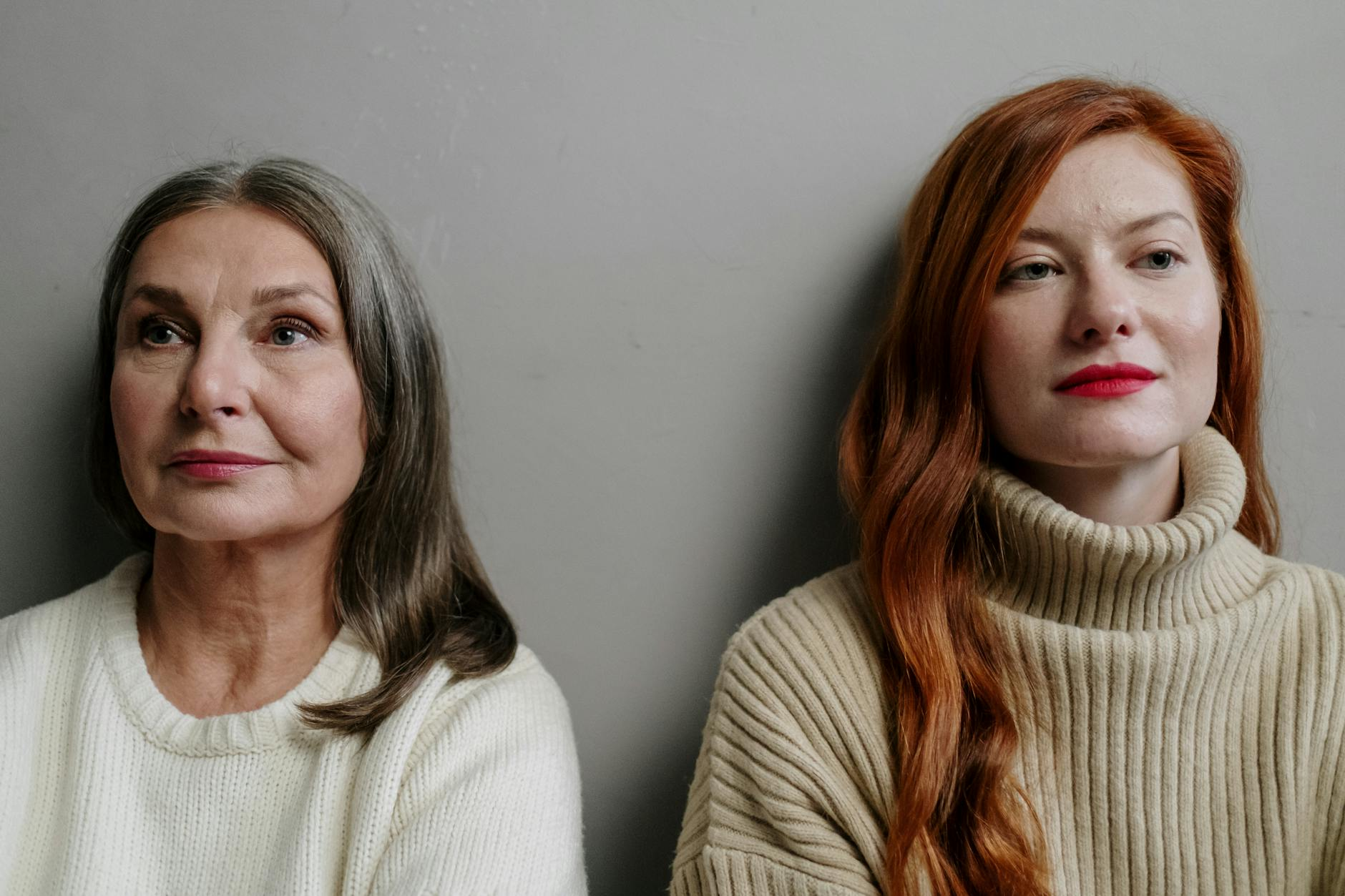
The Revolution of Authenticity
Remember when finding your first gray hair felt like discovering a ticking time bomb on your scalp? Or when holding that restaurant menu at arm's length finally became ridiculous enough to admit you needed reading glasses?
These moments used to trigger panic, shame, and frantic appointments with colorists or desperate attempts to hide those readers in your purse. But something remarkable is happening: a quiet revolution where midlife men and women are collectively saying, "So what?"
Welcome to aging out loud—the radical act of growing older without apology, concealment, or shame.
The Gray Hair Rebellion
It wasn't the pandemic alone that sparked the gray hair revolution, though those months of salon closures certainly accelerated it. The seeds were planted years earlier by pioneers tired of the chemical cycle, the expense, and the fundamental question: Why exactly am I doing this?
"I spent 23 years coloring my hair every three weeks," says Marissa, 52. "That's roughly $46,000 and 64 full days of my life spent in a salon chair, all to conform to some arbitrary standard that says women can't be visibly aging while men become 'distinguished.'"
The double standard is impossible to ignore. Silver-fox men grace magazine covers while women of the same age are photoshopped into oblivion or simply made invisible. But the tide is turning.
Research shows that 65% of women who stopped coloring during pandemic lockdowns chose not to resume afterward. The movement has even earned nicknames: "grombre" (gray + ombre), "silver sisters," and the empowering "crown of wisdom."

What's fascinating isn't just the physical transformation but the psychological one. Many report an unexpected sense of freedom after the transition.
"The first six months were tough," admits Carlos, 47. "But once I got past the awkward growing-out stage, I felt more authentic than I had in decades. People actually take me more seriously in business meetings now, and dating—surprisingly—got better."
For women, the journey often comes with more complex emotions.
"I worried about becoming invisible," says Tanya, 58. "Instead, I became more seen for me rather than my maintenance routine. My daughter told me I seemed happier, more confident. She was right."
Reading Glasses: From Hiding to Statement Piece
If gray hair represents one battlefield in aging acceptance, reading glasses represent another.
The average person begins experiencing presbyopia (the gradual loss of near focusing ability) around age 40. Yet how many of us have strained our eyes to avoid that first pair of readers?
"I would rather get a headache than admit I couldn't see the menu," laughs David, 45. "Then one day my teenage son just handed me his reading glasses across the table and said, 'Dad, this is getting painful to watch.' It was a wake-up call."
The reading glasses industry has responded to our collective reluctance with ingenious "hidden" solutions: ultra-thin readers, contacts specifically for presbyopia, and even surgeries. But the aging-out-loud movement asks: What if we treated reading glasses like any other accessory?
"I now own seventeen pairs in different colors," says Elaine, 49, who runs a popular Instagram account showcasing her daily readers. "They're on chains, beaded cords, magnetically attached to my clothes. They're conversation pieces. People stop me to ask where I got them."
The Psychology of Zero Apologies
What does it mean to age without apology? It's not just about appearance—it's a fundamental shift in mindset that ripples through every aspect of life.
Dr. Michelle Torres, psychologist specializing in midlife transitions, explains: "When we stop apologizing for natural biological processes, we free up enormous mental and emotional energy. My clients who embrace aging report better relationships, increased productivity, and significantly higher life satisfaction scores."
This shift often begins with small rebellions:
- Answering honestly when asked your age
- Using the phrase "I need reading glasses" without self-deprecating humor
- Posting unfiltered photos on social media
- Correcting ageist comments rather than laughing along
- Buying clothes that fit your current body, not your "someday" body
"These might seem inconsequential," Dr. Torres notes, "but they're revolutionary acts in a culture that treats aging—especially female aging—as failure."

Societal Backlash and Moving Forward
Of course, not everyone celebrates this evolution. Comment sections still fill with unsolicited advice about "letting yourself go" or questions about "what your spouse thinks." Friends might express concern that you're "giving up." Even well-meaning family members may struggle to adjust their perceptions.
Janet, 61, recalls: "My mother was horrified when I stopped coloring my hair. She genuinely believed I was sabotaging my career and relationships. It took two years before she stopped sending me articles about 'reversing gray hair naturally.'"
The key to navigating this resistance is understanding its source—fear. Our culture has made aging so terrifying that choosing to age visibly feels threatening to those still clinging to youth-preservation narratives.
"When someone criticizes your choice to age naturally, they're often defending their own choices," explains Dr. Torres. "The best response is compassion coupled with boundary-setting. You might say, 'I understand this works for you, and I'm happy with my choice.'"
The Unexpected Benefits
Those who have embraced aging out loud report surprising advantages beyond personal liberation:
Financial Freedom
The average woman spends $55,000 on hair coloring in her lifetime. Reading glasses marketed as fashion statements cost a fraction of progressive lenses or contacts. These savings can be redirected toward experiences that actually increase happiness.
Time Reclaimed
Monthly colorist appointments, daily appearance-management routines, and mental energy spent worrying about looking "old" add up to thousands of hours. Imagine what you could do with that time.
Authentic Connections
"The quality of my relationships improved dramatically," shares Michael, 54. "When I stopped obsessing over my appearance, I could focus on meaningful conversations. I found myself connecting with people across generations in ways I never had before."
Health Improvements
Many report reduced stress, elimination of scalp irritation from chemical dyes, and freedom from headaches caused by squinting rather than wearing needed glasses.
Modeling Better Aging
"My daughter told me she's less afraid of getting older because of me," says Vicki, 57. "That alone would make every strand of gray worth it."

Moving Beyond Appearance
While gray hair and reading glasses represent visible markers of aging, the "zero apologies" philosophy extends far beyond appearance.
True aging out loud means:
- Sharing your age and experience as valuable credentials, not shameful secrets
- Pursuing new interests without concern for "age-appropriateness"
- Embracing changing priorities without explaining or justifying them
- Speaking up about health concerns without minimizing symptoms
- Celebrating milestones rather than dreading them
As Rebecca, 63, puts it: "I spent my thirties and forties apologizing for existing in spaces where I wasn't young enough. My fifties were a transition. Now in my sixties, I recognize that my perspective is precisely what makes me valuable in most rooms."
The Aging Out Loud Challenge
If you're intrigued but not ready to go full silver fox overnight, consider starting with these smaller steps:
- Linguistic shift: Eliminate apologetic language about aging from your vocabulary for one week
- Digital authenticity: Post one unfiltered, unedited photo on social media
- Visible tools: If you need reading glasses, use them publicly without comments about "getting old"
- Growth mindset: Start one new activity you've been avoiding because of age concerns
- Community building: Connect with others embracing similar philosophies through online groups or local meetups
The Future Is Silver (And Seeing Clearly)
The aging-out-loud movement isn't just about individual choices—it's creating cultural ripples. Media representation is slowly improving. Fashion brands are featuring models with natural gray hair. Reading glasses are being designed by luxury brands as coveted accessories.
More importantly, conversations about aging are evolving. Instead of focusing exclusively on prevention and reversal, more people are discussing how to age well, with dignity, purpose, and yes—visibility.
As we collectively release the shame associated with natural aging processes, we create space for more meaningful contributions, connections, and celebrations in our middle and later years.
The next chapter isn't about fading away—it's about showing up fully as exactly who you are, silver strands, reading glasses, wisdom, and all.
No apologies necessary.
For more articles on embracing each life stage authentically, visit our 40s, 50s, and 60s categories at Next Chapter Magazine.
Discover more from Next Chapter Magazine
Subscribe to get the latest posts sent to your email.